by Ross Bishop
We live in a culture that, in many ways, contradicts the universal truths shared by spiritual teachers throughout history. Since our culture is mainly Christian, I will discuss this material in relation to Jesus' teachings. However, the insights of Buddha, Confucius, Lao Tzu, Neem Karoli Baba, Babbaji, or Moses could just as easily apply, as their teachings are all almost identical.

Regarding Christianity specifically, many widely accepted practices of mainstream Christianity have been influenced by pagan customs, traditional practices, and intellectual reasoning — not directly taken from the Bible. In many cases, Jesus actually taught the opposite of today’s accepted Church practices. In this discussion, I will try to stay true to Christ’s teachings.
Western culture has traditionally struggled with spirituality because it conflicts with some core societal values. The universal truths challenge the ideas of wealth accumulation, individualism, and hierarchical institutions like kings and armies, as well as authoritarian Church doctrines such as sin, the Inquisition, and excommunication.
To illustrate what I observe in the West, I will use an example of a person trying to cross a large river, swimming across the current. Instead of going with the flow, our swimmer will use a lot of energy fighting it. He might eventually reach the other side, but there has always been an easier way. Western society offers some programs, but to really embrace Christ’s teachings, we would need to change some fundamental beliefs, and so far, we have not been willing to do that.
Economics forms the current foundation of Western society. The economic system promotes competition. In the West, worth is based on success, which is measured by the accumulation of power and/or wealth. The spectrum of Western society ranges from being homeless at one end to living in a mansion in the Hamptons at the other. While circumstances influence both extremes, we look down on the homeless but praise the wealthy and their ego-driven lifestyles of yachts, limousines, facelifts, and second homes in the country.
Economics is driven by anxiety—worrying about earning money, measuring up, and keeping a job. It’s like dangling a piece of cheese over a hungry group of mice. The reward goes to those motivated to jump higher and faster than others (Charles Darwin). In society, clever oligarchs give just enough of “their” cheese to calm the masses while also leaving them a little hungry. With the advent of unregulated AI and its control by relatively few oligarchs, there is great concern over its future impacts on society.

Jesus strongly opposed wealth. He said, “It is easier for a camel to go through the eye of a needle than for someone wealthy to enter the kingdom of God.” Why did he have such a strict view of the rich? Greed and hoarding conflict with what Jesus taught and how he lived. His lifestyle involved caring for and giving to others in need. Being wealthy, on the other hand, is about satisfying one’s desires with little inherent concern for others.
Looking at the lives of the teachers I mentioned earlier, you'll see that they all chose simple lifestyles because that way of living aligned more closely with their beliefs. It’s not that accountants, lawyers, and stockbrokers aren’t important; it’s that we often overlook those who work out of passion rather than for money.
Businesspeople wear expensive suits, live in luxurious homes, and drive fancy cars. On the other hand, you’ve seen the clothing homeless people wear. Compare that to Mother Teresa of Calcutta, who cared for the sick; Jane Goodall of Tanzania, who raised and protected gorillas; or Dian Fossey, a dedicated primatologist who was murdered in Rwanda by a poacher.
Jesus demonstrated humility throughout His life and service. Although He had every right to be honored, He chose to serve others. “For I did not come to be served, but to serve.” He told the twelve disciples, “Whoever wants to be first must be last of all and servant of all.” Essentially, he taught that you should put others before yourself. Then he proceeded to wash their feet.
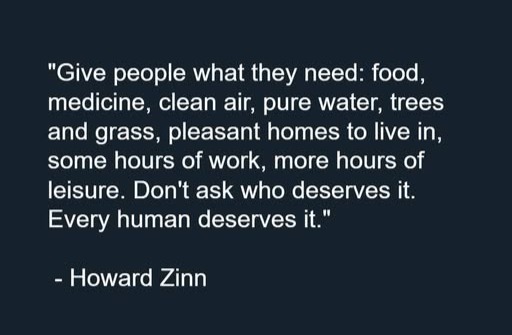
You understand the Golden Rule: “Do unto others as you would have them do unto you.” This principle is the foundation of Judaism and the Torah that Jesus grew up with. But does it apply to how we treat grocery clerks, waitstaff, or taxi drivers? What about the poor, the infirm, and the disabled? While we feed, clothe, and house ourselves, Jesus taught that we should also do the same for others.
He urged us to help those in need, even when it requires a personal sacrifice. This includes being humble and generous, not hoarding wealth or boasting. It also involves treating others, including enemies, with kindness and avoiding conflict.
And what about those who have wronged us? Jesus states, “Do not resist an evildoer. He encouraged people to forgive those who wronged them. “If anyone strikes you on the right cheek, turn the other also, and if anyone wants to sue you and take your shirt, give your coat as well.” Jesus said, “I say to you: Love your enemies and pray for those who persecute you.” However, those who commit such wrongs are driven by forces beyond their control. Explaining this involves a lengthy and complex argument that is beyond the scope of this article, but they need our compassion and help, not our retribution.
Jesus also said, “Blessed are the peacemakers.” Yes, this refers to those who help resolve conflicts between others, but it also clearly includes avoiding conflicts with others in the first place. He also said, "The sun shines on both the evil and the good, and it rains on both the righteous and the unrighteous." If God did not choose, neither should we. He emphasized that people should treat everyone with kindness, regardless of whether they are righteous or not. All of Jesus' teachings focus on one main goal: to establish a peaceful kingdom.
It's difficult to read these teachings without comparing them to our society. We perform small gestures, such as helping the sick and elderly, and supporting the homeless and those in need. However, it's not on the scale that Christ urges. Neil DeGrasse Tyson said, ”It fascinates me that giving to charities is considered noble and praiseworthy, but creating a society that doesn't require charity is considered socialist and bad.”

Although the West has universal education, America does not have universal healthcare. As someone said, “Only 32 of the 33 industrialized nations have succeeded in making universal healthcare work. Some workers actually sleep in their cars while they pay taxes at a higher rate than the oligarchs.
It surprises most people to learn that the number of emotionally troubled individuals in America is high, amounting to about 58 million people. Seventy-seven thousand of them are homeless. Among these, 14 million people suffer from severe mental illness, which greatly hampers their daily lives. Some wander the streets with little support or shelter. Most struggle alone; many turn to drugs, and a few resort to guns. The rest of the population clings to whatever financial security they can get. Our priorities are first to protect what we have and second to improve our situation a little.
On a broader scale, issues like global warming, gang violence, crime, drugs, guns, and political corruption persist. It highlights the amount of progress that lies before us. However, that doesn't mean we should overlook the significant improvements we’ve already made. As someone said, “In the Middle Ages, people lived in castles because they needed them.” And yes, we have a ways to go, and that path is going to require some pretty fundamental changes, but in the American West, where I live, 200 years ago, most males wore guns.