
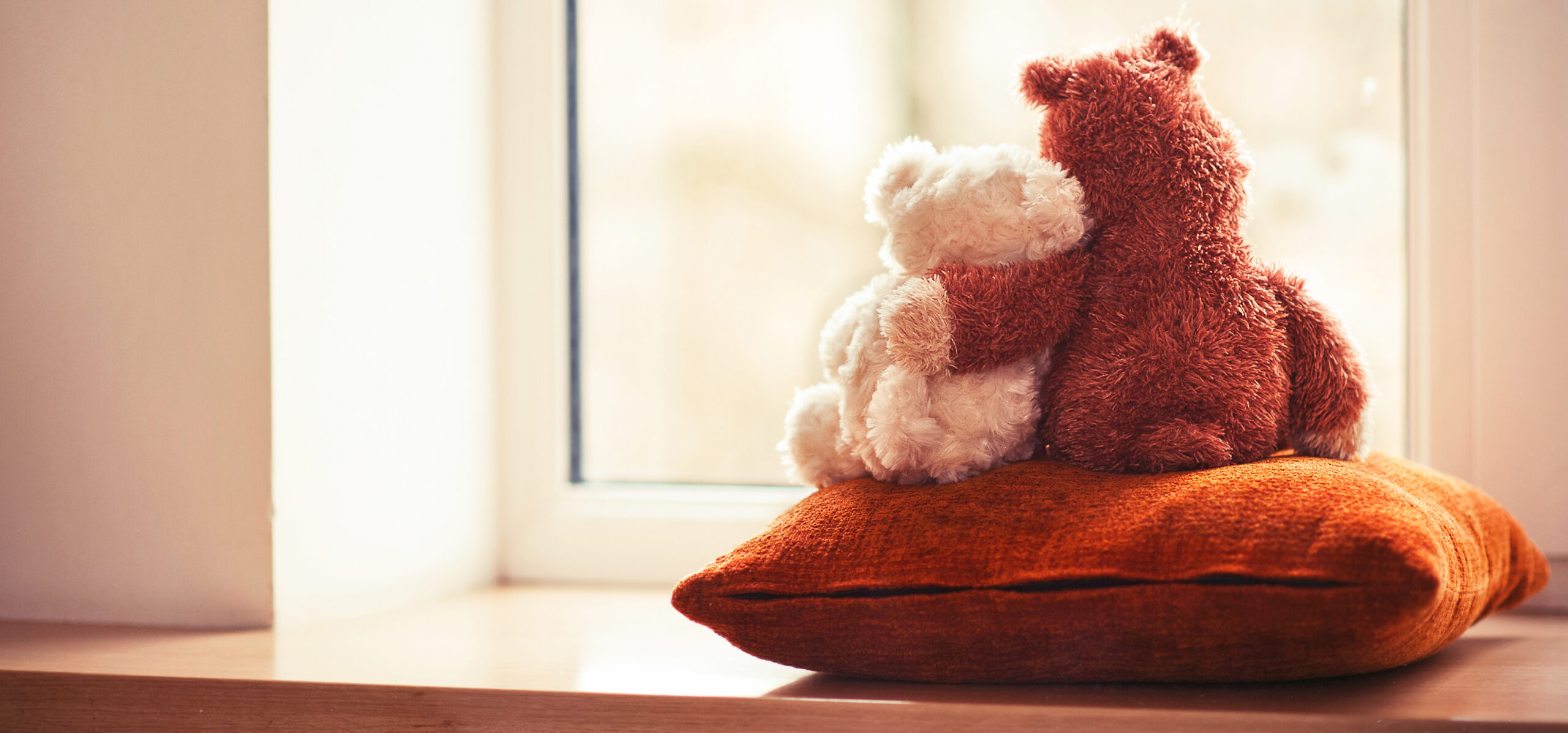
HEALING THE INNER CHILD
THE SITUATION
If you had a bucket with a leak in it, you could spend the day moping the floor or you could plug the leak. Our society has a gaping hole in its bucket. We are so accustomed to the statistics of murders, beatings, suicides, gang violence, car thefts and break-ins that we have become numb to them. We spend a gazillion human hours and billions of dollars to deal with crime, drug addiction, depression, gun violence, suicide and a hundred other things, and the cost to society cannot even be calculated. Dominique Luzuriaga, the widow of Detective Jason Rivera who was recently shot and killed in New York, said, “The system continues to fail us. . . We are not safe anymore . . .” It doesn’t have to be that way!
One way to understand this situation is to see it as a group of traumatized, rage filled, wounded inner children running rampant through society. This is because it is a wounded and traumatized inner child that drives these behaviors. And from criminals to gang members to school bullies to school shooters to depressed and suicidal teenagers, they are everywhere. And healing these wounded and traumatized inner children is the plug we propose for society’s leaky bucket.
We have come to this conclusion because through years of shamanic healing practice, we have yet to encounter a single dysfunctional person who did not have at his or her core, a seriously wounded and traumatized inner child. And as Bart Simpson said, "Inside every hardened criminal beats the heart of a ten year old boy.”
Shamanic training requires us to deal with our inner woundedness. This uniquely prepares us to help these traumatized people to heal. We have been there, we know the territory. We will help introduce, whatever age group we are working with (or their parents), to their wounded inner selves. We will then guide them to create an ongoing and supportive dialogue with their wounded inner one that will allow them to heal their pain and trauma.
CHILDHOOD
We are all wounded by our parents in childhood, and that wounding has been designed into the life process to assist in our spiritual development. Explaining that is a complicated subject beyond the purview of this document. Children by design are needy beings and they go to their parents with open hearts, expecting to be received with unconditional love. But in many cases the parent, because of their own childhood wounding or the interference of things like drugs and alcohol, is unable to respond as the child needs. If the parental dysfunction is serious, the child’s self image becomes traumatized and damaged. This sets the child out on a spiral of self-denigration. The feeling is, “(Mommy/Daddy) didn’t give me the love that I need, there must be something wrong with me.”
The perfect setup in this situation is that children are innocent. He or she could not have done anything to generate this kind of response. The innocence of children is designed, as it were, into the process. But nonetheless, the impact will be devastating to a small child. This, of course, gets much worse when the child is also met with violence, abandonment or outright abuse. And this behavior has been regrettably passed on from parent to child for generations in these families.
OUR APPROACH
One of the mechanisms humans use to deal with inner pain is to isolate and disassociate from it. This is the beginning of the separation and isolation we see between the adult and their wounded inner child. These dysfunctional feelings eventually turn in one of two directions. The child will either repress what she feels and enter a depressive state (suicide is the second leading cause of death for teens), or these feelings will turn into rage which demands external expression of its pain - bullying, shoplifting, or worse.
The pain and trauma, although it may now be unconscious, is still there. We are dealing with a child who does not feel whole, who is unable to interact with the world as an equal. He or she must find ways to compensate for his or her feelings of inadequacy. And thus the child, later young adult, begins a downward spiral that often leads to drug and alcohol addiction, gang involvement, sexual deviance, domestic abuse and in the extreme, serious crime. And that is where our work begins.
Our approach begins by introducing participants, regardless of age, to their wounded and disenfranchised inner child. This is a critical time because the inner one is likely rage filled and traumatized from being repressed and abandoned for years. And although the reconciliation will be emotional, the inner child intuitively knows that this reconciliation is her only way back. We need to research if there are age limits to how young a chid we can work with. We have been dealing with adults for 30 years, so we have that down to an art. But young children, with their active imaginations, may pose a problem. We need to study this.
One reconciliation with the inner child is underway, we will then proceed to guide the older one to create an ongoing dialogue with their inner one. We will guide them to learn to love, respect and most importantly listen, to the pain that the inner one carries. This allows the older one to give the inner one the love and support he or she so desperately needs.
The bond we will create between the subject and his or her inner child will become the key resource we will use to facilitate each individual’s healing. Working in our favor is that the whole thing started with a profound misunderstanding. Kids simply are not capable of the things they come to think about themselves! The modalities will be somewhat different depending on the age and experience of participants, but our approach will work with preschoolers through and including, hardened criminals. We have taught knitting to prison inmates.
HEALING
Through using this dialogue between the two parts of the self, we can help the individual return to a more normal balance from their previous rage filled feelings and impulses. Properly encouraged, the older one can provide a window back into what happened in childhood so that the wounded inner child can see that he or she was a victim of circumstance and was not at fault for her parent’s behavior. That will show her that there never was anything wrong with her. And that gives her the space to heal the wounding that has been the driving force behind his or her dysfunctional behavior, in some cases, for years. This dialogue is essential for the healthy emotional well being of any individual, and the relationship we help them re-create will serve them for the rest of their lives.
The saving grace to this story is that underneath all the hurt, buried under years of rejection, bitterness, drug abuse and anti-social attitudes, is a deep part of the inner self that longs for harmony and needs to be loved. This part can sometimes be difficult to access, but it is always there. It has been our experience that even the most hardened amongst us can be healed, if given the opportunity, motivation and proper guidance
WORKING WITH YOUNG PEOPLE
With kids, once we have established a working relationship with their inner ones, in Phase Two we are going to use a “back door approach” to their dysfunctional patterns. They will have already developed responses to life based upon the degree of wounding they have received. We will use established forms - perhaps a story telling and coloring or painting experience for younger kids and something more challenging - like Aikido or a climbing wall for the older kids, that have built into the process success, frustration and failure. We will set up these programs in a context that highlights what we are seeking to achieve with them. Watching for those special moments, our mentors will work with each kid to help them “reprogram” their internal dialogues.
The programs we could use are almost limitless, ranging from the aforementioned Aikido to playing the xylophone. What kind of programs will work best? We don’t know yet. We are seeking funding to research the range of programs to find ones that best suit our needs, the local situation and the needs and interests of the young people involved. These will look the same as “normal” programs, but with our “secret” agenda. We also feel that a “wilderness” experience could add a great deal to the program as well.
We do not envision these programs as being exclusive to troubled kids. In fact, having some more “normal” attendees helps our process. But we will recruit the kids already headed for trouble (and their families) through school counselors, ministers, the police, etc.
PROGRAM OPTIONS
Our program has the flexibility to be adapted into a number of existing programs such as, for example, school classrooms or juvenile detention facilities. We strongly believe that our program will work. We do not know as of yet, in what context it will work best. We will also need funding to train and expand not only our own staff, but to train the facilitators of the various other programs our methods and techniques. Our short term goal is to create two (?) pilot locations.
WORKING WITH PARENTS
Our approach with parents will be pretty straightforward. We want to help them heal themselves so the they can be happier and create a better home environment for their kids.
Many of these parents (many of them single mothers) had deplorable childhoods too, and because of that, have had difficult lives themselves. Besides, change of this nature is not something many of us welcome. They may love their kids, but do not have the parenting skills or emotional stability to create a healthy environment in which children can grow and thrive. We have been dealing with adults for some time doing this work, and so have established a good track record in that regard.
We have been conducting workshops for some time with adults who were traumatized as children. We have taught them to heal the relationships with their inner children, so we know what works. But under present conditions it is difficult for us to just donate our services. And because of the demographics of this audience, we would also like to be able to offer these parents compensation for attending, to either make up for the loss of a second job or to just encourage them to attend. One other thing we plan to do is that as the parents heal, we will bring them together with their children into group activities in order to facilitate the family healing process.
CONCLUSION
We are not naive about being able to totally plug society’s bucket, but our hope is that as these young people and their parents emerge into a healthier environment where they are feeling better about themselves, that we will have had a positive effect on the community and society as a whole.
If you want to learn more about the core philosophy behind this work, you might consider spending some time at: www.rossbishop.com. Ross has also authored a number of books on the subject. You can purchase these on the website or from Amazon.
Ps. We mentioned Aikido as a possible resource because of its emphasis on self-protection and non-escalation. If you are not familiar with it, here is a good demonstration:
Amazing! Aikido special self-defense techniques - Shirakawa Ryuji shihan