
by Ross Bishop
On paper, America was founded on the myth of equality, but in practice that has never been the case. Our schools teach the myth that America is a land of equality and opportunity. That myth has been questioned from time to time for various reasons, but the dominant white culture has mostly ignored those challenges because it could, and because it didn’t want to relinquish its dominant role in society.
Today the rift has reached such a volume that it can no longer be ignored. The combination of the women’s rights and Black Lives Matter movements are opening our eyes to a four hundred year old split between myth and reality for Black people and a thousands year old split regarding male dominance.
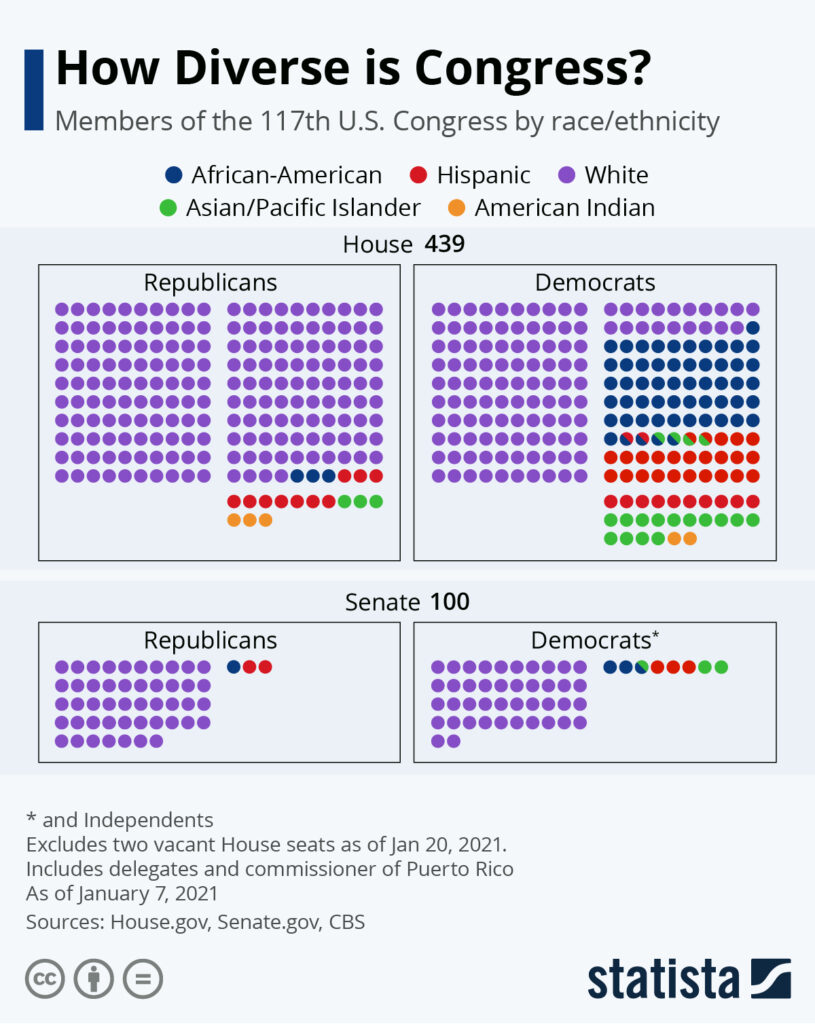
America is steeped in the tenets and practices of white male supremacy. A quick survey of the power centers of business, government and the military demonstrates readily the dominance of white males. Women run 41 of the Fortune 500 companies - that's just 8.2 percent. They hold 26% of the seats in Congress while comprising 51% of the population. We have had 46 Presidents in the nation and we have had only one minority President and we are about to get our first minority female Vice President.
It is difficult to reconcile slave holder Thomas Jefferson (who had a slave concubine) writing, “All men are created equal” in The Declaration Of Independence. This eloquent and oft quoted declaration, in addition to being racist in practice, excluded not only minorities and women, but also disenfranchised the vast majority of the white population. The only people who had political power in colonial America were white males who owned property - about 6% of the population. Saying that the declaration merely reflected the grammatical fashion of the time is to give further credence to the practice of white male dominance.


We are doing better, but we still have a ways to go. Today white women can vote. While 60% of the U.S. population is white, 79% of the Congress is. And as I said, although women make up 51% of the population, they only comprise 26% of the Congress.
In the U.S. voting enfranchisement has been given to the states, an interesting twist when you think about it. It wasn’t until the Presidential election of 1828 that the majority of states gave white males the right to to vote. Then in1868, after the Civil War, the Fourteenth Amendment guaranteed citizenship to all male persons born or naturalized in the country. In 1870 the Fifteenth Amendment theoretically prevented states from denying the right to vote on grounds of "race, color, or previous condition of servitude” to men. But soon after the amendment passed, former Confederate states passed Jim Crow laws to effectively disfranchise African-American and other minorities through poll taxes, literacy tests, grandfather clauses and other similar restrictions. During the period Congress did not interfere and The Supreme Court generally upheld these discriminatory practices. (Note: we are only talking about men here.)
In 1920, almost 150 years after the country was founded,women were finally given the right to vote by the Nineteenth Amendment. In practice, the same restrictions that hindered the ability of non-white men to vote were also now applied to non-white women. It wasn’t until as recently as1964 that Poll Tax payment was prohibited from being used as a condition for voting in federal elections by the Twenty-Fourth Amendment. And it wasn’t until the Voting Rights Act of 1965 that voter registration for racial minorities were protected and discriminatory election systems and districting were theoretically banned. A number of states however, continue these practices through massive registration disqualifications.
So yes, we have come a long way since only land owners were allowed to vote in Colonial America, and the path since then has been arduous and tortuous. Certainly it has not been one of, “All men are created equal.”
And although we are getting there, should it really have taken 400, perhaps it will be 450 years, to achieve one of the founding principles of the democracy? In just this last year, the contrast between the aggressive response by the police to Black Lives Matter protestors contrasted with the deference given white insurrectionists at the nation’s Capital by the guards and the subsequent slap on the wrist punishment handed out by white judges and Presidential pardons, only serves to illustrate how deeply the concept of white privilege is ingrained in American society. Yes, we still have a ways to go.

copyright©Blue Lotus Press 2020
