
by Ross Bishop
The Hero's Journey is a metaphor for the process of healing that comes to us from the wisdom of the ancient ones. They have given us fairy tales and fables so that we might better understand life. These tales bring us the experience of thousands of years of dealing with negative beliefs and healing emotional wounds.
Fairy tales that involve dealing with negative beliefs, something we have come to call the Hero's Journey or the Dark Night of the Soul, are death/rebirth tales that typically involve vanquishing dragons. Not long ago one of the dominant themes of Western religion portrayed the slaying of dragons as the conquest of good over evil.
The dragon is the personification of the animalistic nature of our unconscious dark side, of the shadow. The dragon is the creature that dwells in the dark, damp, slimy swamp where we confine our wounds and our pain. When we act from our unconscious, we can be dangerous! This is our primal energy and we fear it.
In creating dragons, the old myth-makers drew upon powerful fear-creating images. Consider that a dragon is big and incredibly strong, with mystical powers. He is a serpent, who breathes fire and venom. He has claws and fangs, and his eyes are piercing and often hypnotic. He has thick scales to protect him and great wings with which to fly. He swallows horses, sheep, and humans in a single gulp. Consider the impact of the image: it is vital, alive, and captivatingly powerful. This is a very scary beast!
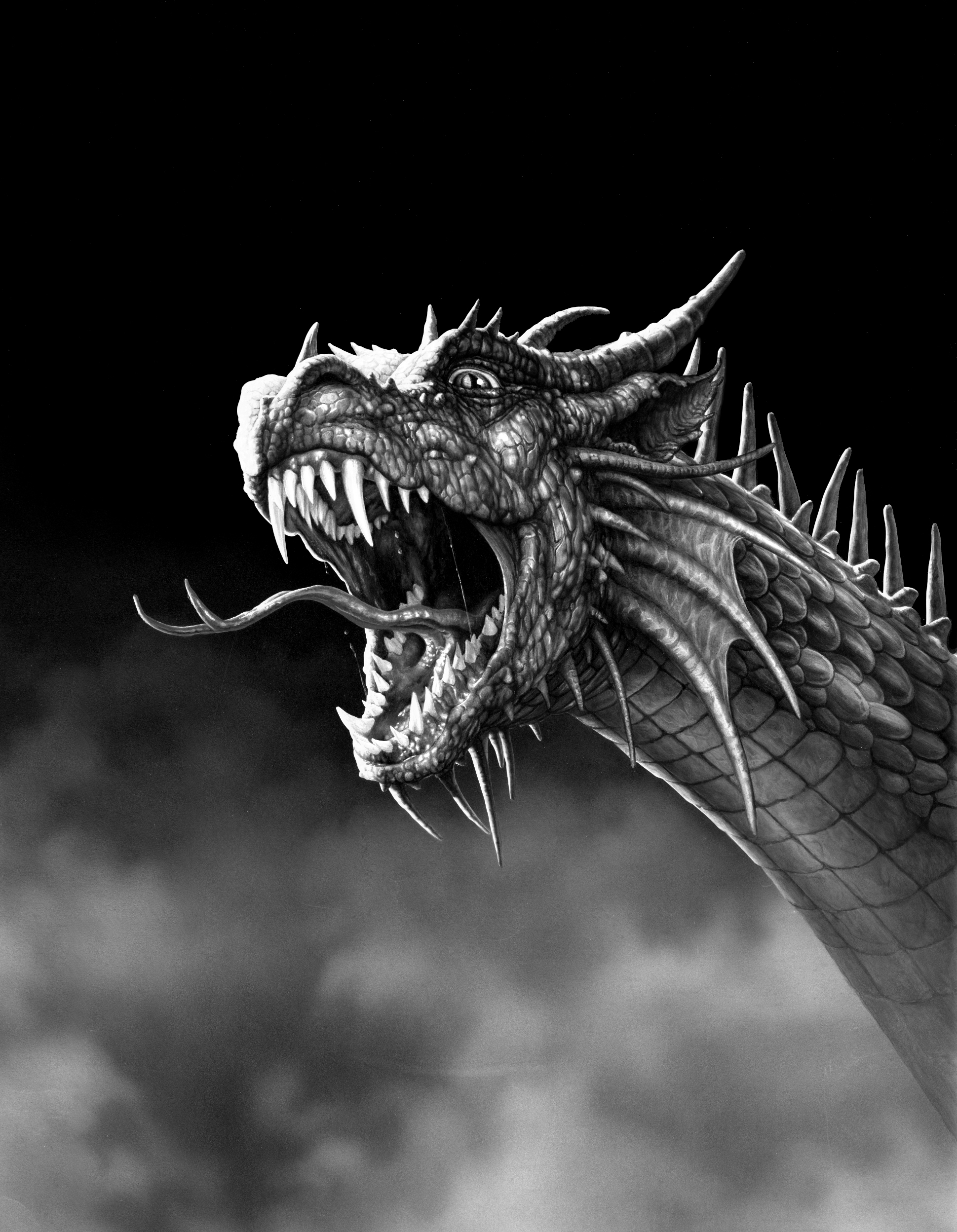
A moment's reflection will point to the allegoric nature of fairy tales when we consider that no one but a complete idiot would confront such a creature by himself and with only a sword or spear. There are obviously deeper meanings here.
The Hero's journey is a metaphor for the pilgrimage into your dark side. The journey into the cave to deal with the dragon is a journey to bring your wounded aspects into the light of consciousness where they can be healed. But you do not vanquish a dragon. You transcend his pain by holding the lies you have believed, up to the light of day.
Once the darkness has been transcended, it provides a wealth of resources unavailable in its unrecognized state. Life becomes richer and fuller. The shadow contains our primal qualities like power and passion, courage, and strength that are not available to our rational selves. When you heal yourself, these resources become available to you once again, instead of being perverted for defense. And when you heal your dark side, you find your passion, your power, and the incredible power of the present moment. These are the rewards of the hero’s journey.
Dragons have a strange passion for collecting gold and hoarding it for no apparent reason. A dragon told Phaedrus, "I guard my gold for no reason of reward or gain, but because great Zeus has made this the proper employment for dragons." Any time you find something out of the ordinary in a myth or fairy tale you know there is a deeper meaning. The gold that dragons hoard is the reward we receive for facing our fear and healing our wounds. It represents the bounty we receive when we quit fighting with ourselves and learn to love ourselves. Before that, dragons are wild and dangerous and the treasure is inaccessible. This is the metaphoric Beast.
There is an old myth from Serbia, a land of wonderful stories and storytellers, that illustrates the journey into the wound and offers some suggestions for dealing with dragons. The story comes to us through Roger Lancelyn Green. It is a long story filled with symbolism. I hope you will take the time from your busy schedule to read it and the accompanying assessment.
“THE PRINCE AND THE DRAGON”
There was once a king who had three sons, fine young men, so fond of hunting that scarcely a day passed without one of them going out to look for game. One morning the eldest gave chase to a hare which led him up hill and down dale and through the forest until it sought shelter in an old mill beside the river.
The Prince followed it to the very door - and then turned in terror to fly for his life. Inside the mill stood a huge Dragon, breathing smoke and fire. But the Prince could not escape, for he was not across the bridge that led to the mill door before the Dragon’s fiery tongue caught him round the waist, plucked him out of the saddle, and drew him into the mill; and he was seen no more.
A week passed; the Prince did not return home, and everyone began to grow uneasy. At last, the king’s second son set out to look for his brother. He had not gone far, however, before up started the hare and led him up hill and down dale and through the forest until it again disappeared into the old mill. After it went the second Prince, and out of the door came the Dragon’s fiery tongue, coiled round his waist, plucked him from the saddle - and he too was seen no more.
Days went by and the king waited and waited for his sons to return, but all in vain. His youngest son wished to go in search of them, but for a long time, the king would not allow him to go lest he should lose him also. But the young Prince begged so hard and promised to be so careful, that at last the King gave his permission, and ordered the best horse in the royal stables to be saddled for the Prince.
Full of hope, the Prince started on his quest. But no sooner was he outside the city walls than up started the hare and away they went up hill and down dale and through the forest until they came to the old mill. As before the hare dashed in through the open door: but this Prince did not follow him. Wiser than his brothers, the young man turned back well before he reached the bridge over the river, saying: “There are as good hares in the forest as any that came out of it, and when I have caught them I can come back and look for you.”
But he rode about in the edge of the forest, out of sight of anyone in the mill but where he could keep a good eye on it. At last, he saw an old woman come slowly out, cross over the bridge and sit down on a fallen tree not far from it. The Prince then rode cautiously out of the forest and up to where she sat. “Good day to you, little mother,” he said, taking off his hat to her politely. “Can you tell me where I shall find my hare?”
“Good morning, my son,” said the old woman. “That was no hare which you followed, but a dragon who has the power of changing his shape, and who has led many men here and then devoured them.”
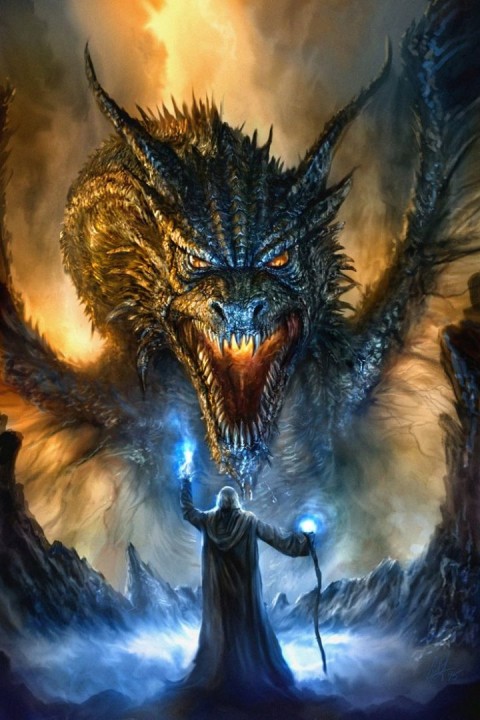
"Alas, then, my brothers have been eaten by the Dragon,” cried the Prince.
“They have either been eaten or put away to be eaten, where you can never find them,” answered the old woman. “And my advice to you is to go home at once before the same fate befalls you too.”
“Will you not come away with me out of this dreadful place?” asked the Prince. “I can promise you a kind welcome and a comfortable home for the rest of your life.”
“I am the Dragon’s prisoner,” she replied sadly, “and I cannot escape from his spells. But I would help you in any way I can if only I knew how.”
“Then listen to me,” said the Prince earnestly. “When the Dragon comes home, ask him where he always goes when he leaves here, and what makes him so strong. Coax the secret from him carefully, and tell me next time I come.”
So the Prince went home and the old woman remained at the mill to coax the Dragon’s secret out of him. She succeeded so well that, after two false answers he gave her the true one: “My strength lies far away, so far that you could never reach it. Far, far from here is a kingdom, and by its capital city is a lake, and in the lake is a dragon, and inside the dragon is a wild boar, and inside the wild boar is a pigeon, and inside the pigeon a sparrow, and inside the sparrow is my strength.”
This sounded as if it must be true and the old woman sadly gave up coaxing the Dragon, feeling that never, never could anyone take his strength from him. When she told the Prince, however, he at once set out dressed as a shepherd to look for the faraway country where the Dragon’s strength lay. He sought in vain until the months of his quest were growing into years, and then at last he came to a large city in a distant kingdom surrounded on three sides by a great lake.
This seemed a likely place and so he went to the Emperor who lived there and offered his services as a shepherd. The Emperor engaged him on the spot, saying: “You may succeed where others have failed. Graze my sheep beyond the lake, but be careful they do not go near the meadows which lie on the edge of the lake itself on this side. They will try to go straight to those meadows, but do not let them - for no sheep which have grazed there have ever come back.”
The Prince’s heart was filled with hope when he heard this. But he bowed low, promising to guard the sheep as best he could, and set out from the palace to take up his charge. First of all, however, he went to the marketplace and bought two greyhounds, a falcon, and a set of pipes. And only then did he drive the sheep to the pasture.
As soon as the sheep saw the lake, they dashed off as fast as their legs would carry them to the green meadows right in front of it. The Prince did not try to stop them: he simply perched his falcon on the branch of a tree, laid his pipes on the grass, and bade the greyhounds sit still. Then rolling up his sleeves and trousers, he waded into the water, crying as he did so: “Dragon! Dragon! If you are not a coward, come out and fight with me!”
“I am waiting for you, Prince!” came a deep voice from the lake, and a moment later out of the water came the very Dragon of the mill, huge and horrible to see.
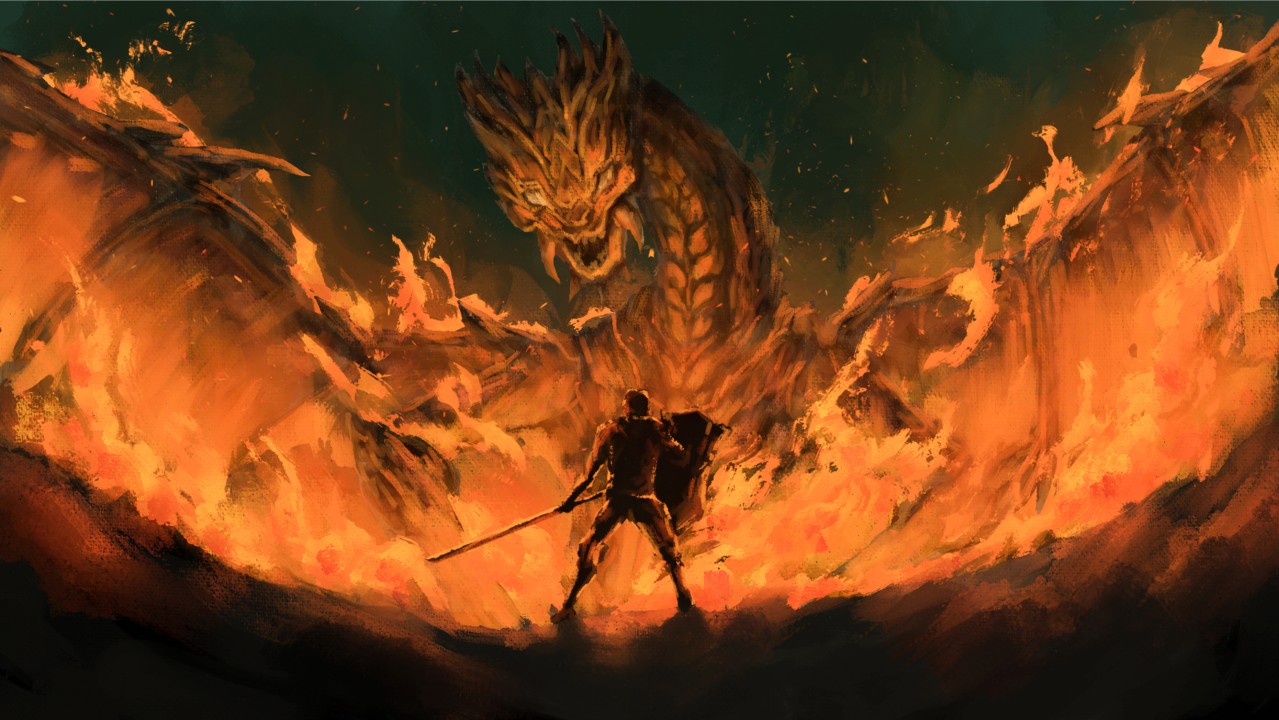
The Prince sprang upon him and they grappled with each other and fought and wrestled until the sun was high, and it was noonday. Then the Dragon gasped: “Prince, let me dip my burning head once into the lake, and I will hurl you to the top of the sky.”
But the Prince answered: “Ah, ha, my dear Dragon, do not boast too soon! If the Emperor’s daughter were only here and would kiss me on the forehead, I would throw you up higher still!” At once the Dragon’s hold loosened and he sank back into the lake and disappeared under the water.
As soon as it was evening, the Prince washed away all signs of the fight, took his falcon upon his shoulder, his pipes under his arm, and with his greyhounds in front and his flock following after him he set out for the city. As they passed through the streets the people stared in wonder, for never before had any flock returned from the meadow by the lake.
The next morning the Prince set out as before, and all things happened as on the previous day. But the Emperor had commanded two men to follow the Prince unseen and report on all that he did and all that happened. They were able to hide quite near the lake and heard all that the Prince and the Dragon said before the Dragon sunk once more under the water, and the Prince drove his flock safely home from the meadows whence no flock had ever before returned.
Later that night the two men reported what they had seen and heard to the Emperor, and after he had heard it all, he repeated every word to his daughter. “Tomorrow,” he said when he had finished, “you must go with the shepherd to the lake and kiss him on the forehead when he asks for it.”
When the Princess heard these words she burst into tears and sobbed: “Will you indeed send me, your only child, to that dreadful lake from which I am quite certain never to return alive?”
“Fear nothing, beloved daughter,” said the Emperor, “all will be well. Many shepherds have gone to the lake, but none of them or their sheep have ever returned. But this one in these two days has fought twice with the Dragon and has escaped without a wound, bringing back with him his flock completely unharmed. So I hope that, with your help, he will kill the Dragon tomorrow and free this land from the monster who has slain so many of our bravest men.”
As soon as day dawned the Princess went to the shepherd who laughed with delight when he saw her. But she only wept the more bitterly. “Do not weep, Heart of Gold,” he begged her. “Trust me and fear nothing. Only kiss me on the forehead the moment I ask for it, and all will be well.”
So they set out, with the shepherd prince playing merrily on his pipes until they reached the lake. In an instant, the sheep were scattered all over the lush meadows by the waterside. The Prince paid no attention but placed his falcon on the tree and his pipes on the grass, while he bade his greyhounds lie beside them. Then he rolled up his trousers and his sleeves and waded into the water, saying: “Dragon! Dragon! If you are not a coward, come out and fight with me again!”
“I am waiting for you, Prince,” came the deep voice out of the lake, and a moment later out of the water came the Dragon, huge and horrible to see. Swiftly he drew near to the bank and the Prince sprang upon him and they grappled with each other and fought and wrestled until the sun was high and it was noonday. Then the Dragon gasped: “Prince, let me dip my burning head once into the lake, and I will hurl you to the top of the sky.”
But the Prince answered: “Ah-ha, my dear Dragon, do not boast too soon! If the Emperor’s daughter were only here and would kiss me on the forehead, I would throw you up higher still!”
Hardly had he spoken when the Princess, who had been listening carefully, ran up and kissed him on the forehead. Then the Prince swung the Dragon straight up and over the clouds, and when he reached the earth again he broke into a thousand pieces. Out of the pieces, there sprang a bore, and in a moment the greyhounds were after it and they caught it and killed it and tore it to bits. Out of these bits, there came rabbit who they also caught and tore up. Out of the remains came a pigeon which flew swiftly away. But the Prince slipped his falcon which towered straight into the air, swooped upon the bird, and brought it to his master. The Prince cut open the dead pigeon and found the sparrow inside, just as the old woman had said he would.
“Now!” cried the Prince, holding the sparrow firmly in his hand, “now you shall tell me where I can find my brothers!”
“Do not hurt me,” said the sparrow, “and I will tell you willingly. In the mill where the Dragon used to lurk, there are three slender twigs. Cut off these twigs and strike the ground with them, and the iron door of a cellar will open. In the cellar, you will find all those whom the Dragon was keeping on ice until he wanted them for his dinner. Breathe three times on each of them, and they will wake as if from sleep - and among them you will find your brothers.”
Then the Prince thanked the sparrow and let it fly safely away. He washed himself in the lake, set the falcon on his wrist, the pipes under his arm, and with the greyhounds gamboling before and the sheep following after, he took the Princess by the hand and set out for the city.
By the time they reached the palace, they were followed by a vast cheering crowd. When they arrived, the Emperor, who had followed unobserved and seen all that had happened, was waiting there to greet them and lead them straight to the chapel royal to be married.
When the wedding and the feast were over, the Prince told them that he was not the poor shepherd he had pretended to be, but a very King’s son - and the Emperor rejoiced more than ever. But the Princess felt that she could not have loved him more had he turned out to be Lord of all the Earth. And when they had freed the two brothers and the other captives from the Dragon’s larder, the Prince and Princess settled down to live happily ever after, and in the course of time became the best-loved Emperor and Empress that the land had ever known.
INTERPRETING THE STORY
Let us consider aspects of this story: The fact there are no women main characters early in the story tells us that there will be an absence of the feminine (not female) energy and therefore an overabundance of masculine (not male) energy. It is likely that the theme of the story will be the resolution of that imbalance. This is reinforced by the preoccupation with hunting, a strong masculine image. Because there are three sons we are also alerted to mythical doings. Three is a magical number.
One thing we need to consider is the wisdom of two intelligent Princes spending their days chasing bunny rabbits around the kingdom. We know that either this kingdom is extremely short of suitable game, or something more serious is afoot. The mystery clears when we learn that the shape of a wild animal most often assumed by witches and other mystical beings is that of the hare (an animal that often represents spirit/life force).
The two Princes’ inability to catch the hare illustrates the difficulty of integrating the vital energy of life from only one side of our beingness. Challenged, the two Princes pursue the vitalizing essence using their masculine energy, the only form available to them.
When exposed (the open door to the mill), to the energy of the darkness (the fire-breathing dragon), the Princes are overcome by it. They are unable to be flexible and make a shift in their consciousness and are therefore captured by the darkness. Before the two Princes can escape, the dragon grabs them and drags them inside. The inner darkness is simply too powerful to be overcome by force of will.
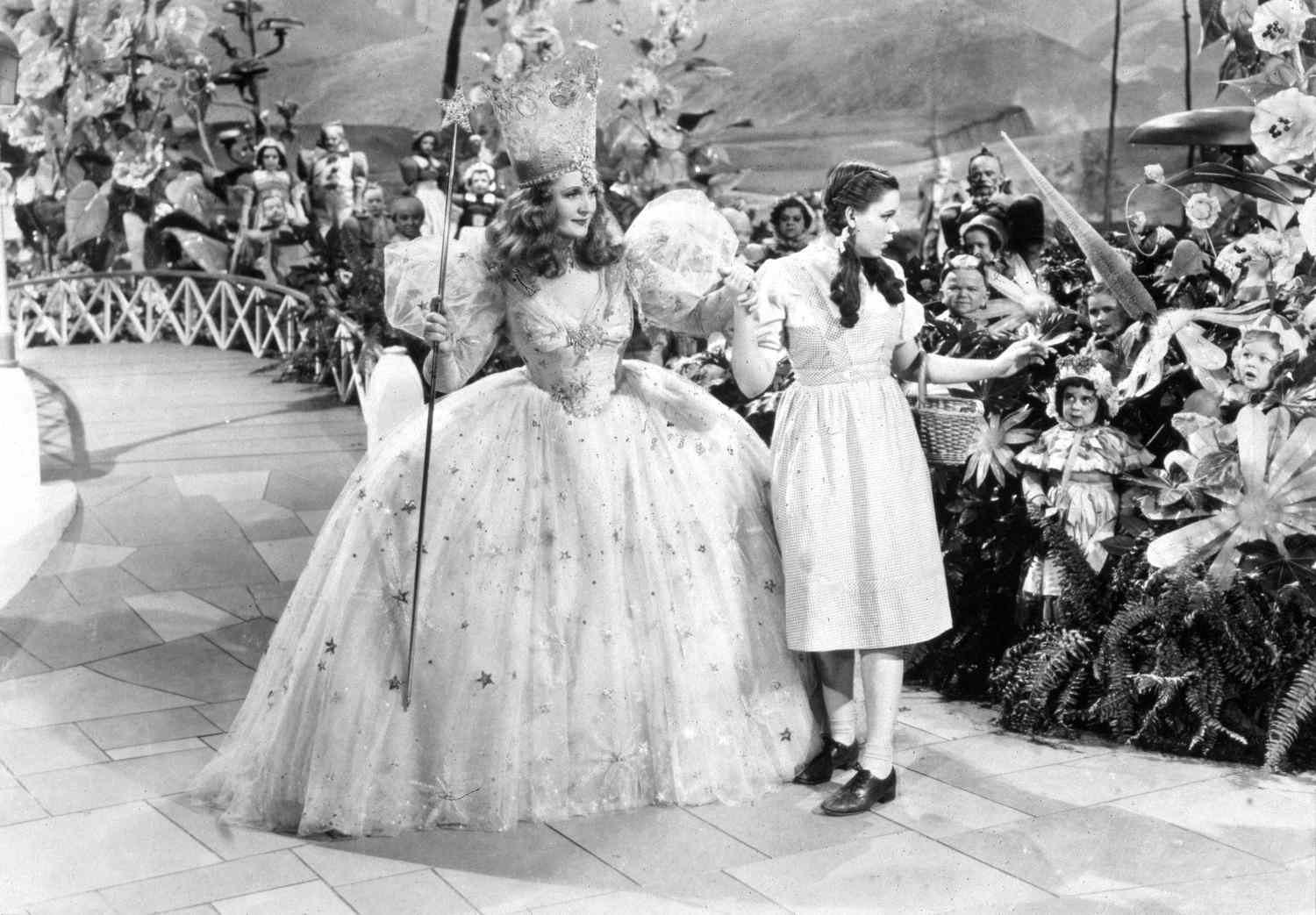
This scene illustrates the raw power of the darkness. It shows how it can imprison a person who has not integrated the power of the shadow into their consciousness. This speaks to the powerful potential for seduction by the dark side (remember Darth Vader?). Note that the setting for this scene is a mill, a place of transformation where grain is changed into flour.
The contrast between the rigidity of the two Princes and the formlessness or shape-changing of the dragon is notable. Dragons are associated with water which is also formless. Lao Tsu pointed out that water is the most powerful of all things because of its ability to be flexible and adapt to any situation.(12) If we cling rigidly to anything, we will be unable to integrate the life force into our consciousness. It is our attachment, our rigidity, that keeps us imprisoned and unable to heal.
The young Prince’s pleas to search for his older brothers is a noble quest. The Prince sets out and immediately encounters the hare and pursues it. Again we know that something is up because no self-respecting Prince would waste his time chasing rabbits when he has pleaded so fervently to search for his missing brothers.
When the hare runs into the mill, the young Prince does not follow him. There is a deeper wisdom in us and, because the young Prince is less attached than his older brothers, he instinctively knows that he is not prepared to take on whatever is in the mill.
Riding around the mill and watching carefully speaks to his wise use of awareness. When the old woman emerges from the mill, the coincidence is simply too great and so again, we know that larger forces are at work.
The old woman is wise, as old women in fairy tales tend to be because they usually represent the strong feminine. The Prince approaches her carefully and greets her courteously because he respects the power that he faces. It is not clear from this part of the story whether the old woman is an aspect of the Prince’s own undiscovered feminine hidden in the darkness (the dragon) or more universal feminine wisdom. In any case, it is good that it has come.
Consider what takes place with the old woman: The Prince has listened to his inner wisdom and avoided a confrontation with the shadow that he was unprepared for and certain to lose. The old woman, in the dragon's power if not the dragon itself, has offered to help him. If the dragon were simply after the Prince it would prevent the old woman from helping him or use her as bait to lure him in. Instead, the old woman comes forward and offers to help the young Prince. She offers the wisdom of the unknown aspect of his being and together they hold the key to the Prince's dilemma.

The masculine response would be to gather an army and assault the mill. But the Prince seems to know instinctively that attacking the mill would not work. Willpower is wonderful for some things, but it is no match for the energy of the shadow. Although there are times when this is the only alternative, that is not so in this instance. Power cannot subdue darkness, only compassion can (remember the lessons of Prohibition, the War Against Drugs, or the FBI’s historically futile campaign against the Mafia?).
Instead, the Prince asks the old woman to coax from the dragon the secret of its power. And, of course, she does. We must consider again that a dragon with magical powers and great wisdom would not reveal the source of his strength unless he wanted the Prince to discover it.
The Prince is wise enough to know that he is up against something far greater than himself and so he seeks to learn about it. When the woman explains that “Inside the dragon is a wild boar, and inside the wild boar is a hare, and inside the hare is a pigeon, and inside the pigeon is a sparrow, and inside the sparrow is the dragon's strength,” she illustrates the layers we must peel away to get to the core of the wound. Notice the declining nature of ferocity and size as we move through the layers to the core, making them conscious, coming to the sparrow and its wisdom - the source of real power.
Having learned about the darkness, the Prince prepares to set out on his quest. He has received information, but having knowledge is not sufficient, he must put it into practice. He uses the guise of a humble shepherd, not a warrior because he is not yet a True Prince.
In order to deal with the dragon the Prince must travel to another realm, as you must on your inner journeys. The kingdom associated with a lake is a wonderful metaphor; the deep pool of the unconscious in which the fierce dragon lives and for which we must quest. After years of searching, for this is not an easy journey, the Prince comes to the kingdom. He has doubtless experienced suffering, as have you, and like you, is standing at the opening of the dragon’s lair, peering into the wound.
The Emperor, not a mere king, who rules this place, hires this young shepherd. Again anomalies: What is an Emperor doing wasting his time hiring shepherds? In any case, the Emperor cautions the young man to keep the sheep away from the meadow near the lake, for no sheep that have grazed there have ever returned. (Sheep do not fare well against the darkness.) We know that the Prince has come to the right place.
In cautioning the Prince, the Emperor expresses the anxiety of the establishment: “Don’t take risks, don’t rock the boat, we’ve lost too many sheep already.” The Prince, however, disobeys the Emperor, intuitively knowing that playing it safe and ignoring the unconscious, will not serve the situation. There is a time to break the rules and do it your own way. However, these times must be carefully chosen. Too often we break the rules for the wrong reasons and at the wrong times.
The two greyhounds and the falcon that the Prince obtains are noble hunting animals and strong allies. One might consider them to represent the personal resources one gathers as the experience of the journey unfolds.
Confronted by the Prince, the dragon’s response, "I am waiting for you, Prince," tells us that he knew the Prince was coming! The dragon, described as huge and horrible, springs from the depths and the two begin to wrestle. Again we find an anomaly. Here is an unarmed and unprotected youth struggling with an obviously vastly more powerful adversary. The Prince knows instinctively that the only way to deal with the beast is to take it on directly. We can only imagine his courage and fear as he wades into his unconscious for the encounter.
The Prince must go after the dragon into the dark pool of the unconscious. It cannot be done any other way. Heroism aside, the dragon has invited the contest and, presumably does not really want to vanquish the Prince. If he does, he has gone to great lengths to simply acquire lunch.
The two fight until high noon and the dragon gasps, "Let me dip my burning head once into the lake, the waters of life, and I will hurl you to the top of the sky."
The Prince responds, "If the Emperor's daughter were only here to kiss my forehead, I would throw you higher still!" The dragon immediately withdraws to the bottom of the lake.
There are many important points in this part of the story. The Prince is struggling with the dragon as we all struggle with our inner Beast. We struggle because that is all we can do when we only have access to part of our being, i.e. the old ways, that are dominated by our fear. The two fight until high noon, the time when there is no shadow.

Operating simply from his masculine side, the Prince will be unable, as were his brothers, to bring the darkness into the light. At best it will be a standoff. But, with the benefit of the totality of his being (the kiss from the Princess, representing his feminine power), the Prince can subdue, i.e. bring into consciousness, the darkness, represented by the dragon.
When presented with this fact, the dragon immediately withdraws for there can be no further struggle. How does the Prince know this? We all have access to inner wisdom if we will take the time to listen.
On the second day, the Prince and the dragon wrestle again until noon. The Prince has sustained no wounds and has lost none of the sheep but he and the dragon are at best, even. Overcoming darkness is not a simple thing. It takes time and effort.
On the third day (you have to do things three times in fairy tales) the Princess, named Heart of Gold, has reluctantly accompanied the Prince. The Princess represents the feminine aspect of the hero and together with the dragon and the Prince is the third piece of this trilogy.
The Princess is uncertain because she has not experienced the protection of the Prince's warrior energy. This speaks to the incompleteness of any single aspect of our beingness. The Heart of Gold is the immortal and untarnishable heart center through which we balance and blend the forces of our lives.

The Princess's kiss symbolizes the essential integration of the self. Realizing his self-worth, i.e. his love for himself, the Prince can now throw the dragon up, and over the clouds, into the light. Now that he is complete, the Prince simply transcends the old struggle. The transcendence of the struggle is a point easily missed. The Prince did not vanquish the dragon as much as he moved the whole process to a higher level where struggle became irrelevant.
In reading fairy tales, it is important to remember that each character in the story represents some aspect or quality of the self. Each tale is the story of the inner journey. In this story, a fierce and powerful dragon has been defeated by the power of self-love. In integrating and learning to love himself, the Prince has moved to a higher level of consciousness. The dragon knows that through this process he will be transcended. There is no room for darkness in a being filled with compassion and light.
Another important image is the Prince's wrestling with the dragon. This is not an intellectual process. The Prince cannot resolve the conflict by sitting on the shore reading books or going to seminars about dragons. He must be willing to wade into the dragon's domain and wrestle with the Beast, a most dangerous reptile! How repulsive! That is exactly how it feels when we confront our Beast (our shadow).
Yet, if we are to transcend our pain, we must find the courage to face whatever is in the cave and meet it on its own terms. The only way we can effectively integrate all the aspects of ourselves is through the transformative process of facing our darkness. No amount of understanding or analysis will substitute. The dragon does not wish to defeat us, as he is a part of us! His ferocity is a facade designed to force us to find the inner courage to face our pain and fear. When we make that decision we have already won, for then the dragon cannot defeat us.
Courage, not strength, is the essence of the Hero's Journey. Confronting the fears associated with wounds is not enjoyable. This fear can make even the strongest people weak. Most of us struggle against fear, but this just creates frustration and consumes enormous amounts of our personal energy.
Fairy tales teach us that fear of the dragon is a self-created myth. The Ancient Ones explain that the difficult part is rolling up our sleeves, wading into the lake, and calling the dragon out. This story tells us that if this unarmed boy can face his dragon, his shadow, so can you. The fear exists to keep you immobile, to keep you away from what has been an unsafe place until you find the courage to take it on. Some people wait until they hit bottom, until their lives fall apart, before they are willing to peer into their woundedness. They create so much despair that anything would be better than their deadlocked struggle with themselves. Only then will they relinquish control and surrender.
The transformation of the dragon from a reptilian, water-dwelling monster, to a ferocious land mammal, and then to the hare, pigeon, and finally to the sparrow, speaks to the evolution that occurs in our shadow as we acknowledge, accept, and finally come to love it. The birds symbolize the movement to the higher realms of spirit enabled by the integration of the self.
With the sparrow in hand, the spirit of the dragon says, "I will tell you willingly." The dragon, once a seeming enemy, has become an ally now that it has been integrated into consciousness (remember Beauty and the Beast?). The Prince frees the sparrow, knowing that it will be available whenever he needs it.
The brothers are frozen, we can presume, by their inability to change. The Prince does not set out to free his brothers immediately, however. He must complete his integration (marry the Princess) because only then can he truly help others. The Emperor conducts the wedding and the Prince reveals himself to be a king's son, for he has become a True Prince.
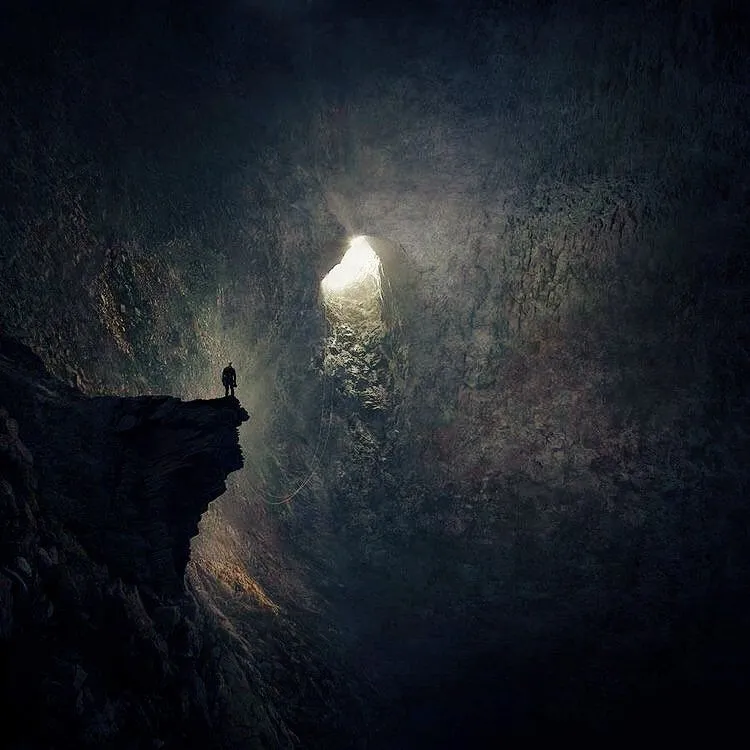
Freeing the brothers by breathing on them three times can be construed as the teaching or the service one performs after healing oneself for those still held prisoner by the darkness.
They all live happily ever after and the kingdom is renewed through their unity. The Prince incidentally, becomes an Emperor not just a king. And we know that somewhere up in the clouds the dragon is smiling.
When you know that you cannot be harmed, you can face life with compassion rather than fear. This is one of the secrets of Mastery. In facing the Beast you transform it. Beauty freed her Beast when she decided she could love him. The Prince freed the dragon by going in after him. This is the secret and the bounty to be obtained from healing.
By finding the courage to venture into the cave, you make the hero's journey and reap the hero's rewards. Not only will you unload a lifetime of emotional baggage but you gain a powerful new ally as well! The inner demon that has beset you for so many years will transform into a powerful ally. That is a very profitable payoff for such a venture! Then if you continue your work, you will start to connect with the beings of light and access their infinite wisdom and compassion. This is the dragon's real golden treasure.
In the healing process, one must identify the wound, accept the pain associated with it, become free of attachments to it, and find the courage to march into the dragon’s cave and face it. Facing it is not doing battle with it. The struggle is a human way, it is not God’s. That is a hangover from the European age of conquest.
The healing process is one of learning to love and heal the wounded parts of the self that have been stuffed into the bag. After all, they are just doing their thing. Bringing the wound into the light and meeting it with compassion transforms it and allows your wounded self to release the negative entities associated with it.
Healing the wound converts this liability into a significant personal resource. And it makes a great deal of energy that has been tied up in stress and anxiety available for life. It creates compassion and brings us into direct contact with the infinite wisdom and power of The Creator. This is the purpose of life. This rite of passage is called the Hero's Journey because it is one of the most courageous trials you can undertake.
This is a poem by stone carver, Dan Raven:
DANCING WITH THE STONE PEOPLE
The music should be low,
deep, and mysterious,
like the didgeridoo
groaning in the wind,
or the talking song
of the stand-up bass,
the boom-boom beat of a
stretched animal skin,
or the melodious deep chanting
of the Tibetan monks.
No feet are necessary,
no clocks to keep time,
but don’t forget
your dancing dreaming costume
made by elves and angels
from the translucent
threads of humility.
