
by Ross Bishop

There is a pattern in business organizations (corporations and corporate associations) that becomes noticeable as they increase to a certain size. Regardless of their founding intention, their instinct for self-preservation overwhelms any vestige of concern for interests outside the organization, and this intensifies as the organization grows. Whether it is the tobacco industry, big oil, drug manufacturing, plastics, etc., when it comes to your or society’s interests vs theirs, yours will lose every time, and the cost can be considerable.
Consider these examples: for many years, the tobacco industry knew its products were harmful, yet its survival instincts overrode any obligation to public health. Similarly, scientists and environmentalists have long pressed Big Oil on global warming, only to be met with denials, disinformation and distortion. Big Oil’s stranglehold on Congress and state legislatures insulates it from adopting a more responsible posture.

Plastics pose a similar problem. Plastics add a great deal to our lives in many ways, but after we use them, we dump millions of tons of them into our landfills, and the plastics industry has suppressed the fact that its products don’t truly degrade. For the sake of our health and environmental sustainability, plastics need to be recycled. To put things in perspective, this burden has been foisted on the public by an industry that has no interest in covering the cost of recycling its products, in protecting your health, the health of the oceans or the environment.
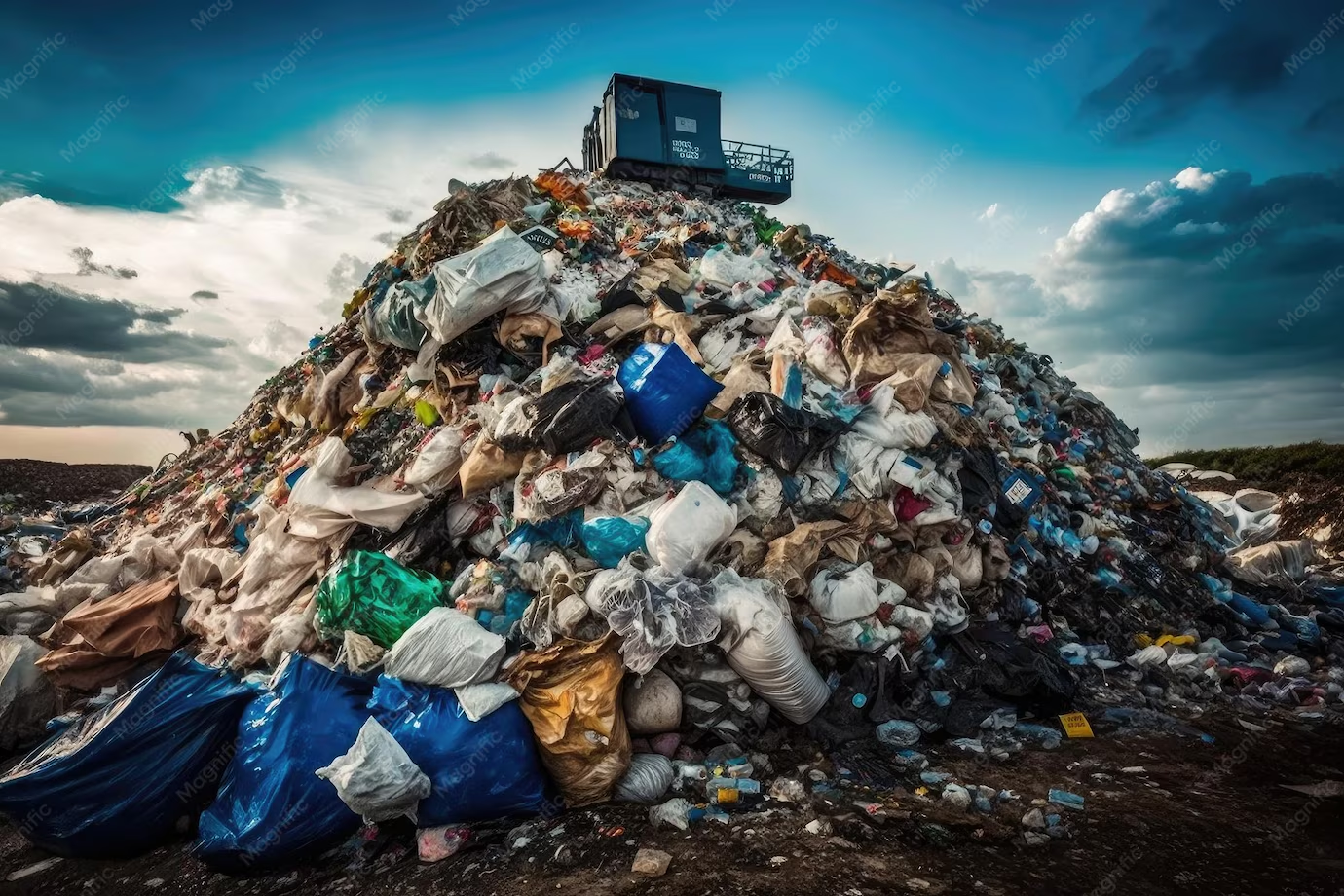
Go down the list and pick your industry: after Big Oil, Tobacco and Plastics comes the Food Industry, which poisons us with food chemicals banned by most other nations; the Insurance Industry, which is more interested in profit than in health; Social Media which shows little concern for the damage it does to our children, the Drug Industry with its obscene profits, and AI which shows little concern for its impact on society, the environment or the economy. The list is almost endless.
What causes all this? Corporate people have families and live in communities just like yours! The answer is the organization’s isolation from public influence. As a corporation grows, its management becomes increasingly inward-focused and insulated from external influence. An executive’s success is measured by internal performance, not by public acceptance. When was the last time you heard a corporate CEO defend his company’s contribution to society? Similarly, corporate organizations are narrowly focused and not interested in public well-being.
Shareholders were originally intended to provide public influence over the corporation, but that influence has never been given a real voice. Government ostensibly provides regulatory oversight, but that function has been effectively emasculated by insider lobbying, business-friendly legislation, illicit payoffs and campaign contributions, thanks to the conservative U.S. Supreme Court.
Because of these conflicts, the long-term prospects for capitalist society as it stands today are not good. Although corporations have played this game successfully for many years, it appears the curtain is starting to come down. The capitalist system has too many inherent conflicts with contemporary society’s needs. Although it will be an uphill fight, the public interest will win out. Whether it will be an overt or quiet revolution remains to be seen. The Soviets threw out capitalism years ago and replaced it with a thoroughly corrupt system. The Chinese, and others, seem to have made a more peaceful transition. Our path will probably be more restrained, but if you look closely, the harbingers of change are already on the horizon.
copyright 2026@Blue Lotus Press
