
by Ross Bishop
If you look out at the horizon, you will see the storm clouds gathering for the end of the era of rational thought that has dominated Western society for the past 400 years.

There’s nothing wrong with rationality; it’s just that its scope is too limited to meet the needs of a compassionate society. Along with rationality, capitalism will lose its dominant position for many of the same reasons. As we become more compassionate, there will be less tolerance for the greed and self-centeredness that come with capitalism.
In the past, many notable figures have proposed alternatives to Western thinking, but they have generally been dismissed out of hand by the establishment's dominant business and scientific communities.
However, the success of the Nordic nations in blending socialism with capitalism and the remarkable success of Chinese Communism are prompting some leaders to rethink the rational premises on which Western capitalism and society have been built. Coincidentally, as physicists delve deeper into the nature of matter, discoveries in quantum mechanics are reshaping scientific thinking and prompting scientists to reconsider some of the theories they have used to explain the universe.
KARL MARX
Widely condemned and castigated in the West, Karl Marx is widely regarded as the most trenchant critic of capitalism. In Das Kapital, published in 1867, Marx identified several important shortcomings in the foundations of the capitalist system that, as he predicted, will eventually cause it to slip from its dominant position.
Marx maintained that capitalism was founded on the exploitation of labor. His claim rested on his analysis of the labor theory of value, which holds that all economic value derives from labor. According to Marx, the only commodity not sold at its real value in the capitalist system is human labor. Put simply, workers are paid less than the value they produce. The difference between the value workers produce and what they are paid is the source of profit for the employer or the owner of the means of production. That is the fundamental issue in Marx’s critique of capitalism.
Imagine this: give a chicken to Amaury Bouhours at Le Meurice Alain Ducasse in Paris. With Bouhours’s expertise, the dish you get will be extraordinary because of his knowledge, training and skill. Bouhours earns a comfortable living, but he doesn’t receive the real value of his effort. And the difference goes to Alain Ducasse, the restaurant’s owner.

Perhaps it was idealistic, but Marx wrote that if workers were paid the value they produced, there would be no profit and capitalism would disappear. In its place would be socialism, in which property was socially (rather than privately) owned, and all members of society would contribute according to their ability and receive according to their needs. In Marx’s model, the result would be a society without capitalist exploitation and worker alienation.
Understandably, Marx sends capitalists into orbit. He has been vehemently criticized by capitalists because he threatens the premise on which their entire existence rests, and at present they hold the reins of power in Western society. Pooh-poohed in the West, Marx’s ideas have flourished in places like Russia (despite its incredible corruption), China, North Korea, Laos, Viet Nam, Cuba, and a few others. Several European countries have also adopted some (God forbid!) “socialist” policies.
CHINA
As China celebrates the 75th anniversary of the founding of the People's Republic, the world reflects on the remarkable journey of a country that has transformed itself from one of the poorest nations on the planet into the world's second-largest economy. This meteoric rise, marked by economic prowess, scientific advances and global influence, positions China as a key player in shaping the future of global development.

China is the world's largest trading nation and a top trading partner for more than 120 countries. Its success has been nothing short of phenomenal. China has a GDP accounting for about 18% of global output and a growth rate of 5.2%. The People’s Republic 75 years of transformation demonstrate not only the resilience of its people but also the strategic vision that has turned the country into an economic powerhouse and a vital partner in global cooperation. There is little on the horizon to slow its success.
The defining feature of China’s business model is the government’s active role in shaping the economy. China’s industrial strategy is a comprehensive mobilization of state resources, private enterprise, and national priorities that has reshaped the global technology competition. The government prioritizes long-term planning, often setting ambitious goals through five-year plans. This approach enables consistent policy implementation and resource allocation.
Unlike purely free-market economies, where private enterprises operate with minimal interference, China uses a “state capitalist” model. The government directs resources to strategic sectors, including technology, infrastructure, and manufacturing, while maintaining control over critical industries such as banking, energy, and telecommunications. As a result, the nation has leveraged its vast labor force and natural resources to drive growth by liberalizing trade, encouraging foreign investment and emphasizing industrialization.
By focusing on high-priority areas such as artificial intelligence, renewable energy, and advanced manufacturing, China ensures it remains globally competitive. Massive investments in highways, railways, ports, and digital networks, much as we did during the Eisenhower years, have laid a solid foundation for economic activity. And China’s authoritarian system enables swift decision-making and policy enforcement.
Just this week, China released Kimi K3, an AI-based program that “threatens the foundations of America’s AI boom.” When it was released, it dazzled Silicon Valley developers.
THE NORDIC COUNTRIES
The Nordic countries are often cited as examples of successfully balancing capitalism with the social welfare needs of their societies. This is often attributed to “The Nordic Model” – a system that combines free-market capitalism with robust social welfare policies, fostering economic growth, entrepreneurship and social equity.
The Model is associated with social democracy, which emphasizes a strong welfare state, equal opportunities, and a fair distribution of wealth. This includes universal access to free social services, such as education, healthcare, and childcare, as well as other essential services for its citizens. This helps ensure that access to healthcare is not dictated by income level, as these services are not viewed as commodities to be bought and sold but as social necessities. This approach is said to foster a dynamic and stable economy.
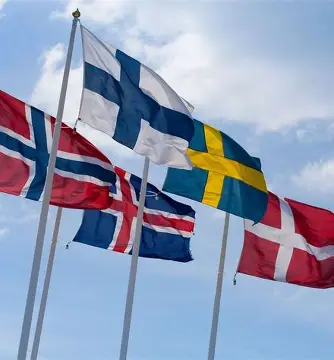
The Model has attracted significant attention in recent years for delivering strong economic performance alongside social equality, challenging the belief that economic productivity must come at the expense of social equity. Socialism, as practiced in the North, is dismantling the cold, impersonal, rational barriers of capitalism that have driven Western societies’ past success. Political leaders in Western nations increasingly view the more compassionate, heart-based programs of the Nordic nations as viable alternatives to the cold, inhumane, “Get a job!” rationality of traditional business economics.
The central role of compassion in government programs should not be overlooked. Of the 150 happiest countries in the world, The World Population Review consistently ranks the 6 Nordic countries among the top 7. By comparison, the U.S. ranks 23rd.
Furthermore, the Nordic Model recognizes the importance of gender equality and strives to build an inclusive society where women have equal opportunities in all aspects of life. Policies such as parental leave, affordable childcare, and flexible work arrangements have contributed to high rates of female labor force participation across Nordic countries.
Another key feature of the Nordic Model is its focus on progressive taxation and wealth redistribution. The Model combines economic efficiency with social equity through high rates of progressive taxation and flexible, stable labor markets. This approach is credited with reducing social inequality, as increased tax revenues from higher rates are reinvested in public and welfare services. The tax system is designed to ensure that wealthier individuals and corporations contribute more to society while supporting those who are less fortunate, regarded as “failures” in the West. This approach helps reduce income inequality and create a more equitable society. For example, in Sweden, the top marginal tax rate can reach 57%, enabling significant investments in social programs and public services.
Walter Russell
In 1921, Walter Russell, an impressionist painter, author, sculptor, scientist, inventor, builder, musician, and cosmologist, experienced what he called “a divine illumination,” which he said gave him profound insight into the workings of the universe.
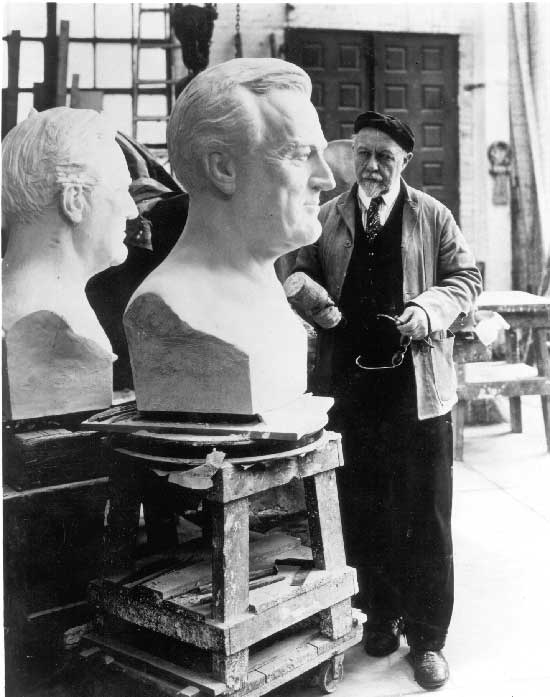
One of the core principles that emerged from this experience was the belief that the universe was sustained and governed by the interplay of love and wisdom. He saw love as the dynamic force driving growth, expansion and evolution, and wisdom as the stabilizing force that directed that growth harmoniously, thereby preventing chaos and disharmony.
Russell sought to merge spirituality and science. Russell never referred to an anthropomorphic god, but rather wrote that "God is the invisible, motionless, sexless, undivided, and unconditioned white Magnetic Light of Mind”that centers all things. He also wrote that religion and science must come together in a New Age. But even more important than specific theories is that Russell (and others) have begun to crack the limiting edifice of rational thinking that has long ruled the scientific community.
It is only now, many years after his death, that quantum mechanics (despite entrenched internal resistance) is beginning to accept some of Russell’s non-rational precepts (including matter as frozen light, the observer effect, plasma cosmology, string theory and quantum wave-particle duality), among others.
During his lifetime, he published extensively, defending his ideas through a number of books and, especially in the New York Times between 1930–1931. In 1943, Russell wrote, "It will be remembered that no one who has ever had [the experience of illumination] has been able to explain it. I deem it my duty to the world to tell of it.” He was an outsider, far ahead of his time and as a result, his insights and theories were largely disregarded amid the chaos and upheaval surrounding WWII.
If you are interested in taking this investigation further, I would encourage you to visit this insightful video on rationality, Darwin and natural selection:https://www.facebook.com/reel/1537809591215125
copyright@Blue Lotus Press 2026
