
by Ross Bishop
Pretend you are three years old and something you have just done is absolutely not acceptable to your parents. As a result, you have just received a powerful jolt from them. After you get over the pain of the moment what will you do? You’ll probably think twice before trying that again! You were just being a kid, and you weren’t trying to be disruptive, but if those desires ever come up again, you will shut them down, and fast! Some natural aspect of yourself has just been shut away in your bag.

Intended or not, many adult environments are toxic to the needs of children. In the first place, many things kids love to do, like making noise, running around, touching things, or playing in the mud, do not fit well in a social context.
A kid’s natural curiosity puts them at risk, and one of the important functions of families and social institutions is to teach children to survive – “Don’t run into the street,” “Don’t stick things in electrical sockets,” etc. Parents’ responsibility is to protect children and teach them about life.
This is one of the important ways children learn about the world. It forms much of their belief structure about life. During this time children absorb an enormous amount of information. Children are sponges and absorb the beliefs, pain and behaviors that adults model unless they are challenged to find their own, or out of rebellion, take opposing perspectives.

Ideally, the learning children receive from parents about their behavior creates positive impressions about themselves and life. But in addition to not touching hot stoves and staying out of the street, families, schools and religions also teach social and personal values. Parents and social organizations have beliefs about what is appropriate and proper and they want to teach those values to young people. But those values and morals can be easily twisted by fear and anxiety.
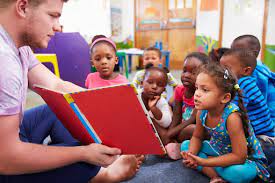
It would be wonderful if the creation of our beliefs stopped there, but they don’t. Parents put a lot of other “does and don’ts” into a child’s head. Along with the “shoulds, oughts, and don’ts,” children are given biased views about themselves, their sexuality, their self-worth, not being smart enough, being unnatractive, etc. Then there are views of other races, ethnic groups, political beliefs, class values, religious biases, gender differences and a whole host of other biases and prejudices. And, you might also consider why these are “charged” issues in the first place!
In these families, it is not made clear that these are personal beliefs and that there are other, often conflicting, views. Youngsters learn about “acceptable” behavior and morality, which can vary widely from one group to another. Some of the messages children receive are their parents’ interpretations of life, but some are also expressions of the parents’ unresolved emotional issues. Many adults have difficulty dealing with their emotions and do not handle charged issues like intimacy and sexuality very well themselves. This makes it difficult for them to adequately respond to a child’s natural curiosity.

Children’s questioning can force parents to defend things they closed the door to long ago and very often, never really investigated or challenged themselves.Besides, parental beliefs are not always well founded and can be threatened when children question parental values, which, of course, kids must do if they are to find their own values. Instead of guiding the child to form her own beliefs about herself or other races or ethnic groups, for example, parents tend to pass their personal biased beliefs on to their children. After all, this was done to them. Besides, it’s a lot more work to encourage kids to challenge things and find themselves and parents already have a lot on their plates.
Children will blame themselves for the conflict between their natural feelings and the behavior demanded by parents or society. No one would blame a kid for a parent’s behavior, but that is what the child does. Children cannot know the messages they receive are distorted. Children do not have a discernment faculty or experiences that will allow them to discriminate. The child says, “There is a conflict here, therefore it must be my fault.” And of course, many parents reinforce that message. The child looks out at the world and says, “Either these people are crazy or I am.” Guess who loses?

I want to separate beliefs from universal truth. Universal truth speaks to everyone i.e., “All people are created equal,” or “We hold these truths to be self-evident.” You can embrace these values and practice them, but they originate from a different source, they are not personal. Beliefs however, are personal: “I am ______” or “I am not ________, blacks are ____, men are ____, Republicans are ______
Kurt Vonnegut Jr. comments:
I’ve often thought there ought to be a manual to hand to little kids telling them what kind of planet they’re on, why they don’t fall off it, how much time they’ve probably got here, how to avoid poison ivy and so on. I tried to write one once. It was called “Welcome to Earth.” But I got stuck on explaining why we don’t fall off the planet. Gravity is just a word. It doesn’t explain anything.
If I could get past gravity, I’d tell them how we reproduce, how long we’ve been here, apparently and a little bit about evolution. And one thing I would really like to tell them about is cultural relativity. I didn’t learn until I was in college about all the other cultures, and I should have learned that in the first grade. A first grader should understand that his or her culture isn’t a rational invention; that there are thousands of other cultures and they all work pretty well; that all cultures function on faith rather than truth; that there are lots of alternatives to our own society. Cultural relativity is defensible and attractive. It’s also a source of hope. It means we don’t have to continue this way if we don’t like it.
I want to separate our beliefs from universal truths. Universal truth speaks to everyone i.e., “All people are created equal,” or “We hold these truths to be self-evident.” You can embrace these and practice them, but they come from another source. Beliefs are personal, “I am ______” or “I am not ________. You might want to take a few minutes and write out your beliefs. Few of us take the time, yet our beliefs shape and control our lives.
Copyright2024@Blue Lotus Press
