
by Ross Bishop
At the time of the American Revolution, British families were experiencing economic upheaval. Food was scarce and rapidly becoming more costly. Yorkshire historian Frank Peel wrote, “A seemingly endless war against Napoleon had brought the hard pinch of poverty to homes where it had hitherto been a stranger.”
At the same time, the emerging factories were offering wages and a degree of work security. Farmers, craftspeople and even women and children were introduced into factory jobs - which is the modern equivalent of slave labor. The deal was, you gave up what you were skilled doing at home, as a trade for working in the boss’ factory, doing something you could care less about. The new jobs required little if any training and nominal skills, and that practice carries into the present.
That transition didn’t come without problems, however. There was an inherent conflict between the sense of quality in hand crafted goods and mass produced factory goods. Craft workers were disturbed by the lack of quality in manufactured goods. In the 17th century an Englishman named William Lee created a machine called a stocking frame that displaced traditional, skilled hand-knitters. Queen Elizabeth I refused to give Lee a patent, out of concern that it would displace traditional weavers. Later, Lee’s invention would help the textile industry grow—and create many new, unskilled jobs. British essayist John Galsworthy wrote insightfully about the phenomenon in his “Essay On Quality,” (https://bigblackboots.com/quality.htm)
There has always been a conflict between the boss’s desire to pay as little as possible and workers who felt that their efforts were more valuable than that. Even in those early days, labor disputes caused sporadic outbreaks of resistance. Episodes of machine-breaking occurred in Britain from the 1760s onward. In 1811, in Nottingham, a textile manufacturing center, British troops broke up a crowd of protesters demanding better wages. That night, angry workers smashed textile machinery in a nearby village, giving rise to the fabled “Ned Ludd” and the Luddite movement. Similar attacks occurred nightly at first, then sporadically, and then in waves, eventually spreading across a large swath of northern England. In France during the 1789 Revolution, disgruntled French factory workers threw their “sabots,” (wooden shoes) into the machinery, leading the creation of the term “saboteurs.”
Fearing a national movement, the government positioned thousands of soldiers to defend the factories. Parliament passed a measure to make machine-breaking a capital offense. As Carlyle put it in 1829, technology was causing a “mighty change” in the “. . .modes of thought and feeling. Men are grown mechanical in head and in heart, as well as in hand.” Money had won over heart.
Today there is no child labor, people work an 8 hour day, get overtime pay, a 40 hour work week, and many workers have health insurance and paid vacations, but no matter how you cut it, they are still working for the man.
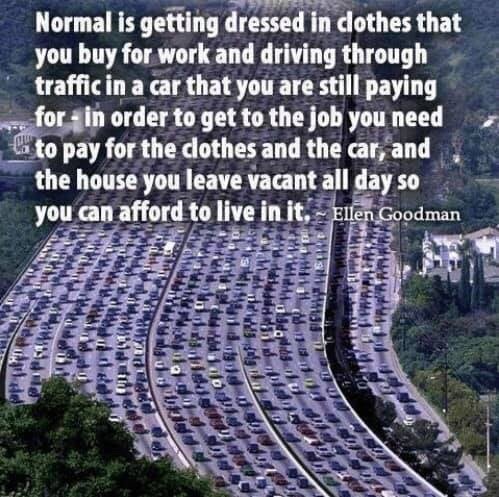
Having a job is so ingrained into our society that people don’t even think about having to work. You need money to survive in a capitalist society, and the only way to do that legally is to get a job. But the concept of work is to do someone else’s bidding. And when you choose a job that is closer to your heart, such as a social issues organization, the financial compensation can be pretty miserly. And in the arts, where people tend to do what they really love, have always been economically repressed. Why do you think that is?
There is value in being a part of something larger than yourself, especially if you can legitimately own part of the outcome, but that is rarely the case. Michelangelo had a number of other artists helping him with the Sistine Chapel, but you don’t hear about them.
Being part of a larger enterprise isn’t as demanding as being a solo performer, and the great majority of people don’t want to make the commitment and take the exposure and criticism that comes with being a high wire act. Being part of an organization allows you to “hide out.” But being a cog in a machine masks individual efforts - it limits successes.

You can take pride at building a tractor, or a sofa or a computer program, for example, but it it is still someone else’s tractor, sofa or computer. And you may be good at what you do, but honestly, who wants to cook at a stove, change bedsheets, sit at a word processor or build cars for 40 hours a week, so that the bosses and shareholders can live on Easy Street? Even as an executive, even though you do your job well, is that really what you were born to do? But that is the fate that most people choose.
And America has a ways to go to catch up to its European neighbors, who already have generous vacations, universal healthcare, maternity leave, free public education and in general, a far more supportive working culture.
Today in America there is a growing trend of people being independent and working for themselves. And, hourly workers are increasingly rejecting demeaning jobs and minimum wage pay as they begin to stand up for themselves. And although these are positive trends, they are still a long way from fulfilling the dream that lurks inside of each of us, expressing our true selves.
What if, for example, we were to institute a three day work week, with two day’s of paid vacation added to the regular weekend? Capitalists just had heart attacks, but we are a fabulously wealthy society and could easily afford it. Workday performance would undoubtedly increase significantly, too.
And that would give individuals the opportunity to pursue their deeply held, usually unrealized, dreams. There is another reason too, our whole society is walking around wounded. There is no better way to heal the self than caring for others. Remember, "We rise by lifting others." And there will be resistance to doing that. Capitalists like a subservient working class. And some people will be reluctant to give expression to their true selves, but this represents the next big step in human evolution. And there would be great benefit if we were to give people’s dreams an opportunity for expression.

But why is it that things like gardening, doing volunteer work, Caring for the elderly and the infirm, art, reading, spending time in nature, raising kids or being with grandkids, etc., etc. are left to “spare” time? Today there are literally millions of homeless, angry and hurting people walking around in our society. What if we were to turn the collective resource of the community loose to help these people or residents of the ghettos? I’ll bet that drug and alcohol addiction, our annual toll of 60,000 suicides, homicides and school shootings would drop off dramatically. Can you imagine what that would do for our quality of life?
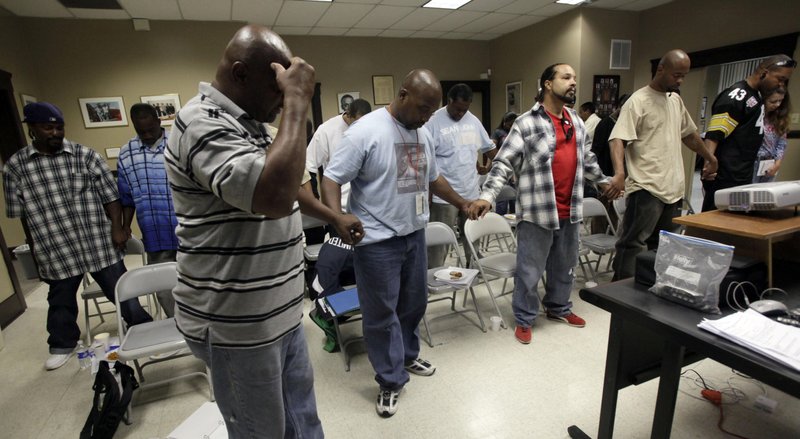
Certainly there is great benefit from running an organization, both to the community and to the self, but you just can’t compare that to reading a bedtime story to your grandchildren or taking a walk with someone you love. You weren’t put here to run a factory or work in one. It is time that we unleash the power that resides within each of us.
Copyright©2022 Blue Lotus Press
