
by Ross Bishop
We have known for some time that violence in the home leads eventually to anti-social behavior. New research is telling us that there is another, seemingly less violent, form of trauma that has an equally devastating impact. That trauma is neglect, and its impacts can be just as devastating as physical violence.
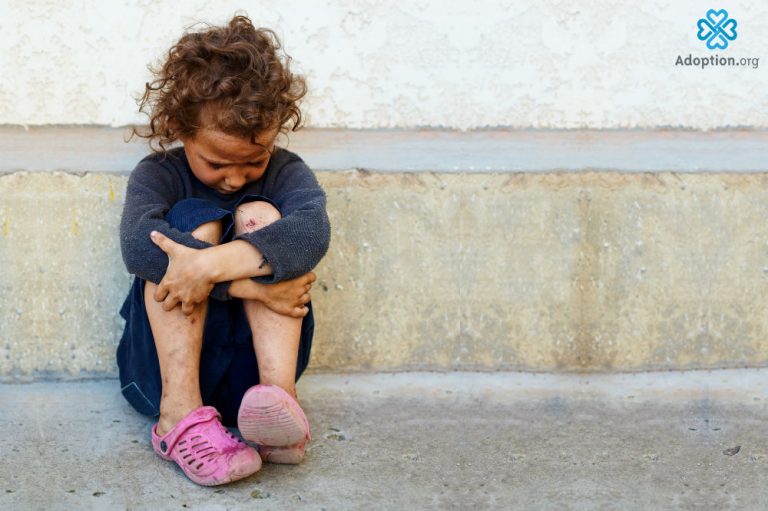
Let me repeat that: Neglect, in its many forms, is just as debilitating and traumatic as outright abuse. In one of the most detailed longitudinal studies on the issue, research sponsored by the National Institute of Justice (NIJ) found that being abused or neglected as a child increased the likelihood of arrest as a juvenile by 59 percent, as an adult by 28 percent and for a violent crime by 30 percent.
We have not understood the traumatic impact on a young child’s impressionable mind of things ranging from outright abandonment to malnutrition. The only link a child has to the world is through his parents and if the security of that link is threatened, the resulting trauma is devastating. If you want to predict whether a child will grow up to be a criminal, ask if he was either abused or neglected as a child.
Jill Leslie Rosenbaum, professor of criminology at California State University, writes: “Research consistently has shown that those youth whose bond to their parents is weak are more likely to be delinquent. Youth who are more attached to their parents have greater direct and indirect controls placed on their behavior.”
As a child's emotional attachment to his parents ensures a well adjusted adult, so parental rejection of the child has powerful opposite effects. Ronald Simons, professor of sociology at Iowa State University, summarizes the research findings: “Rejected children tend to distrust and attribute malevolent motives to others, with the result being a defensive, if not aggressive, approach to peer interactions…. Such [rejecting] parents not only fail to model and reinforce prosocial behavior, they actually provide training in aggressive noncompliant behavior.”

Rejection by the family, which is the child's first and fundamental “community,” sets the stage for another social tragedy. Rejected children tend gradually to drop out of normal community life. Professor Simons continues: “Parental rejection… increased the probability of a youth's involvement in a deviant peer group, reliance upon an avoidant coping style, and use of substances.” (More about this in a minute.)
Many other studies in the professional literature replicate these findings. A meta-analysis conducted by Ronald Rohner of the University of Connecticut concludes: “In our half-century of international research, we’ve not found any other class of experience that has as strong and consistent effect upon personality development as does the experience of being rejected, especially by parents in childhood." We have known for some time that the trauma of adoption, for example, is as damaging as outright sexual abuse.

"Children and adults everywhere, regardless of differences in race, culture and gender, tend to respond in exactly the same way when they perceive themselves to be rejected by their care-givers and other attachment figures.” Amongst other findings, Rohner concluded:
- The pain of having experienced parental rejection during childhood frequently extends into adulthood;
- Those who suffered parental rejection in childhood tend to develop difficulties forming trusting relationships in adulthood;
- Neurological studies suggest that parental rejection activates the same part of the brain as does physical pain.
We have traditionally thrown criminals into prison because we were angry that they broke the rules and frankly, because we didn’t know what else to do with them. The archaic prison system has never worked well, recidivism perennially wavers between 50-60%. But absent meaningful alternatives, what were we to do?
Addressing childhood trauma 30 years after it happened is problematic at best, but sadly, we do not even try to do that. Politicians have been loath to invade the sanctity of the home even in the most dire of circumstances, because without the commitment of a crime by the aforementioned child, removing a traumatized kid from the home raises a host of legal, ethical and civil rights issues. And if pulling a physically beaten child from the home is difficult, just imagine the problems that dealing with issues of trauma from abandonment or neglect would present! It does not matter that study after study has clearly established that violence begets violence—that today’s abused children become tomorrow’s violent offenders.
Under the circumstances, politicians, ministers and social workers have been all too willing to kick the can down the road and dump the problem elsewhere in society such as on the police and the criminal justice system. To be fair, they are not generally trained or equipped to deal with these issues and besides, for politicians being tough on bad guys and putting them in jail gets votes.
Earlier I mentioned substance abuse. I don’t have research to support this premise, but I believe that the same pain that drives people into anti-social criminal behavior is the very same pain that causes others to seek relief through drugs and alcohol. In 35 years of dealing with issues of sexual abuse, domestic violence and drug addiction, I have found the same pain - childhood trauma - as the source of the problem IN EVERY CASE!
WHAT TO DO?
Since intervention into even an abusive family situation is difficult at best, I am going to suggest the creation of Family Centers that would serve as a resource to approach the problem in another way. The Centers would act as a teaching and counseling center for parents, focusing primarily on parenting skills and relationship issues with a focus on reducing childhood trauma. Centers could act as a backstop for teachers, school principles, ministers, school counsellors, the courts and police who may not be trained or equipped to address the causes of childhood trauma. The Centers could provide important backup support to the police in dealing with domestic violence calls.
The Centers could act as a lifeline for parents over their heads with dysfunctional and delinquent children. They could help people apply for nutritional assistance and other governmental programs. This might be a stretch, but they could even offer daycare for working parents. An additional function that the Centers could provide would be resources or even teachers for state mandated high school classes on parenting, relationships and life skills training.
I know that is asking a great deal of the present system, but the thing is, this problem like global warming, doesn’t go away by ignoring it. It gets worse . . .
copyright ©2021 Blue Lotus Press
