
by Ross Bishop
We all have problems. The thing is what to do about them. Problems are disruptive, they lead to stress, depression and anxiety. We would happily ignore them, but of course we can’t. The thing is to create a problem at least one of the participants will be holding false beliefs. And problems are the Creator’s way of calling attention to those erroneous beliefs. We, of course, resist.

One interesting way to deal with this dilemma is to adopt “Hozho,” one of the central concepts of the Navajo people. Hozho means to live in beauty, walk in beauty, always. In short, to be in harmony with all life. While Western culture sees beauty as a surface phenomenon, as in a person's or object's physical appearance, to the Navajo, Hozho extends well beyond that. In their belief system, Hozho is an outward sign of a deeper and more all-encompassing beauty. That beauty is a product of striving for harmony in how one lives one's life. And that, of course, means eliminating false beliefs.
Hozho means living life as an active, ongoing force for good. This is expressed, first of all, in an orderly and harmonious relationship with the self, with other people, with the the natural world and especially with the world of spiritual beings and forces. When the Navajo make a decision, for example, they will consider its implications not just for the present, but also for future generations. That is why it is so difficult for them to understand how we can mindlessly destroy the planet, as we are doing today.
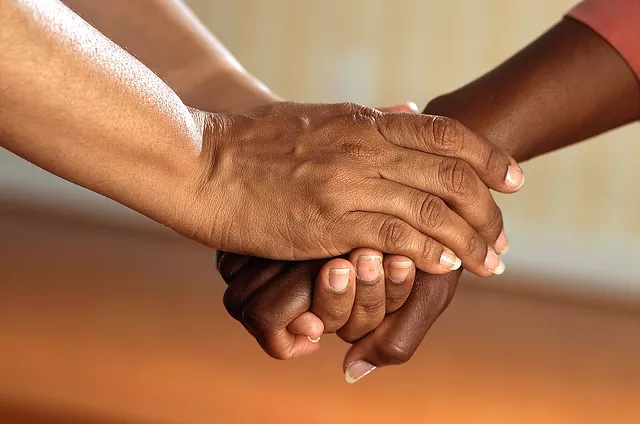
Let’s consider how Hozho plays out on the personal level. What do you do when you are confronted with a problem? Most of the time we put band aids on situations but don’t really go much beyond that. Hozho, requires that we go further to find harmony. Hozho means stepping in, (at least a little), into the other person’s world, in other words, to see the situation from their perspective. I like to think of it as “dancing” with the other. You don’t have to agree with them, in fact you probably won’t, but dancing does create a certain amount of empathy, something we really need today!
And what’s interesting about stepping in isn’t so much what it does for the situation, it’s what it does for you. Stepping in means taking the risk to be vulnerable when you would really rather not, because you will likely be rebuffed. At the core of that is your primal fear of being rejected. The subliminal feeling is that whatever you do, it won’t be enough, and we do not want to deal with the shame of that.
Stepping in confronts that primal fear. And the big secret is, you really have nothing to fear!
If they reject your offer of compassion, you walk!
It’s really that simple! And ultimately that allows you the freedom to be fearless. It takes your focus off of them and puts it back on you, where it belonged all along anyway. But we tend to get all tangled up in their response and loose ourselves.

Let’s take an example - one of the great difficulties many people face in life is the inability to love unconditionally. What is that really about? Why do we hold back? What keeps us from openheartedly loving others? Of course we care, so what’s the beef? At issue, as I said, is the primal fear that we might get rejected, for at the deepest level, we fear being shamed. But once you learn the secret of Harmony -
That you can always walk!
-all of that changes.
So instead of avoiding him, cheerily greet the grump. And if he grumbles at you, walk! But you will feel better for having made the effort, and that’s the secret. So what if he’s an asshole? It doesn’t have to affect you, unless you allow it. And, now you probably have more empathy for his situation, anyway.
So let’s get even closer to home. What about unconditionally loving your kids, your partner or your parents? I know what’s in your heart, but do they know that? We often hold back with the people closest to us because these situations are so “loaded.” These people are so close that a rejection by them can be devastating to the image we hold of ourselves. So we hold back.
So with these situations we have to extend the rule a bit. If you have issues with intimacy, look into your inner child’s fear of being rejected or hurt. If the issue is with your kids, you need to look into your parenting skills. If it is with your partner, look deeper for intimacy issues in the relationship. Parents are in a special place because of the dominant role they once played in your life. Take them out of the position of power they once had when you were a kid. Always be willing to listen to criticism, but do not give anyone the power to determine what is right for you.
When something is not going your way, pay attention. Become aware. Don't fight it. Let it be. You can either accept what is and find the subtle current of peace and harmony flowing below the layers of the situation or you can throw your hands up in despair, crying, "Why me?" But self-pity is an expression of resistance. And when you refuse to accept a situation, you only build a wall of resistance to it. And that only means that the situation will come around again in another context.
Behind every struggle is a lesson of growth or blessing waiting to present itself. In creating awareness, you allow the lesson to come forward. “Pain is not something to be endured. It should be heard and understood.” Remember, the reason a situation exists is to challenge your beliefs (especially the ones you hold about yourself).
How you react is the most important aspect of any situation. Most people go through life on an ongoing quest to find happiness. But happiness is not The Creator’s goal for us - what He/She desires is that we have experience and growth. Peace of mind will eventually flow from that.
Copyright©2023 Blue Lotus Press
